
 Business
 Other
Other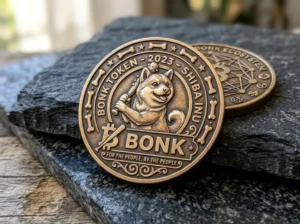
BONK token forecast: growth prospects and possible scenarios
BONK experienced a hard fall in May 2026. The current price is around $0.000004594, about 92% below the ATH (all-time high) of $0.00005898 set on
Arbitrum is a Layer 2 scaling solution for Ethereum designed to make transactions faster and cheaper without sacrificing compatibility with the Ethereum ecosystem. Simply put, the network takes some of the load off the main Ethereum network and processes it more efficiently. The decentralized cryptocurrency ARB serves as a governance token: it is used in the Arbitrum DAO to vote on proposals, updates, and the management of the ecosystem’s development. ARB itself is an ERC-20 token, originally created with a supply of 10 billion coins.
The interest in Arbitrum is understandable. It has long been evident in the market that Ethereum needs to scale: the higher the network load, the greater the demand for L2 solutions. Arbitrum has become one of the most prominent projects in this segment thanks to its ecosystem, EVM compatibility, the development of Arbitrum One and Nova, as well as initiatives such as Orbit and Stylus. In the Foundation’s official H1 2025 progress update, it was specifically noted that over 100 chains have chosen the Orbit stack, and the stablecoin supply in the Arbitrum ecosystem has exceeded $6 billion. This is an important signal for the market: the project is no longer viewed as an experiment, but as a full-fledged infrastructure for dApps, DeFi, and new on-chain products.
Exchange nowIn short, Arbitrum is a solution based on optimistic rollups that helps scale Ethereum. Technically, it maintains a close connection with Ethereum but offloads part of the computation outside the main network. This provides users with more affordable fees and gives developers a convenient environment to launch applications without completely abandoning the familiar EVM logic. The network is built on the Arbitrum Nitro stack, and execution security is ensured by a verification system, fraud proofs, and the BoLD protocol, which enables permissionless validation and limits the time required to resolve disputes through validators.
ARB is not a "gas" token in the conventional sense, but primarily an Arbitrum governance token. Through it, holders can vote on DAO proposals affecting the network, treasury, grants, updates, and governance rules. This is precisely why the price of Arbitrum depends not only on market speculation but also on how the market evaluates the Arbitrum DAO ecosystem itself, its growth, development activity, and the token’s long-term utility.
Stylus deserves a special mention — it is one of Arbitrum’s most interesting technological developments. This system allows developers to write EVM-compatible smart contracts not only in Solidity but also in Rust, C, C++, and other languages that compile to WASM. For the market, this isn’t just a nice feature: Stylus makes Arbitrum significantly more attractive to new developers and could strengthen the ecosystem in the long run.
If you want to buy Arbitrum, sell ARB, or exchange the token for USDT, dollars, hryvnia, or other cryptocurrencies, the process is simple: first, check the current price of Arbitrum, then analyze the chart, and only then execute the trade.
Typically, it works like this: you select the exchange direction, specify the amount, verify the calculation, create an order, and confirm the transaction. This approach is convenient because you see the terms of the trade in advance and can make a decision based on facts rather than emotions — taking into account the current price, trading volume, liquidity, and overall market dynamics.
For those building a portfolio of infrastructure tokens, ARB can be viewed as a bet on the further development of the Ethereum ecosystem. But, as with any cryptocurrency, it’s best not to buy it blindly, but after evaluating the price chart, project news, and market behavior over the past 24 hours and the last 7 days.
ARB can be traded on various platforms: exchanges such as Coinbase, Binance, OKX, ByBit, and many others offer a wide range of trading tools.
The first factor is Ethereum network congestion. The more expensive and slower the base layer becomes, the greater the interest in scaling solutions. As an L2, Arbitrum benefits directly from this because it offers cheaper and faster transactions while maintaining a connection to Ethereum. If the market is once again actively seeking ways to relieve congestion on the mainnet, demand for Arbitrum’s infrastructure typically increases.
The second factor is the development of the L2 sector itself. Today, Arbitrum does not compete in a vacuum: there are other rollup solutions nearby, and the market constantly compares networks in terms of speed, ecosystem, developer-friendliness, dApp activity, and technical updates. This is precisely why the price of ARB depends not only on general crypto sentiment but also on whether Arbitrum remains among the key solutions for scaling Ethereum.
The third factor is Arbitrum news and updates. Technological updates, the development of Nitro, the implementation of BoLD, the growth of the Orbit ecosystem, and the promotion of Stylus are all important for the project. For example, Arbitrum’s documentation highlights that Stylus adds a second virtual machine alongside the EVM and enables the use of WASM languages, while the Foundation’s H1 2025 update mentioned strong interest in Orbit and the ecosystem’s further expansion. These factors matter to the market because they support the long-term investment thesis around ARB.
The fourth factor is governance and tokenomics. The initial supply of ARB tokens is 10 billion, and the DAO can increase the supply by a maximum of 2% per year via a constitutional proposal. This is important for the price because the market always looks not only at the ecosystem but also at potential supply pressure. If investors anticipate new unlockings, new token issuance, or an increase in the circulating supply, this affects the token’s perception.
According to CoinMarketCap and CoinGecko, as of April 7–8, 2026, ARB is trading at around $0.10. Daily trading volume is around $79–80 million, and market capitalization is about $600 million. This means that Arbitrum remains a liquid digital asset that the market continues to watch closely, even though the current price is significantly below its all-time high.
For investors and traders, this is enough to understand the key point: ARB is not a dead token with empty charts, but an asset with a live market, trading volume, and sustained interest. According to CoinGecko, its all-time high was $2.39, and its all-time low was $0.08709. In other words, the coin is currently trading significantly below the peaks of 2023–2024, and this is precisely what makes it both interesting and risky for those looking at its recovery potential.
In practice, the Arbitrum price is important not only in and of itself. It is often compared to Ethereum’s performance, the overall state of cryptocurrencies and the altcoin market, interest in L2 solutions, and the speed of network development. When the market bets on Ethereum scaling again, such tokens receive additional attention. When the market shifts into a cautious mode, the ARB price usually remains under pressure along with other infrastructure assets.
An online chart usually shows the price and change over a selected period: 1 hour, 24 hours, 7 days, a month, etc. To avoid getting lost in the details, it is useful to look at several things:
If you are tracking the Arbitrum to USD exchange rate, it is important to remember that the "single" price is formed on multiple platforms (exchange, OTC market, aggregators). The difference in quotes is usually small, but can widen during periods of high volatility.
In terms of long-term potential, Arbitrum looks like a bet not on a single-season hype, but on a broader trend: the scaling of Ethereum. As long as Ethereum remains the central ecosystem for DeFi, tokenization, dApps, and the on-chain economy, strong Layer 2 solutions will continue to have room for growth. In this sense, Arbitrum has a solid foundation: a recognizable brand, a large DAO structure, an active developer network, and infrastructure products like Orbit and Stylus.
But it’s important not to romanticize the story here. Long-term potential does not mean automatic price growth. ARB remains a volatile asset that depends on market cycles, the strength of Ethereum, competition among L2s, and internal governance decisions. If Arbitrum continues to expand its ecosystem, attract developers, and maintain its status as one of the leading scaling solutions, the token has grounds for a recovery in the future. However, if the L2 sector becomes overheated and the market begins to view governance tokens less favorably, growth could turn out to be much weaker than expected.
In other words, an honest analysis of ARB looks like this: the project has a solid foundation, but the token is not immune to supply pressure, market fatigue, and competition. Therefore, ARB should not be viewed as a "sure thing", but rather as an infrastructure asset whose price will rise only if the ecosystem continues to prove its utility in practice.
Arbitrum is a Layer 2 scaling solution for Ethereum based on optimistic rollups. ARB is the ecosystem’s governance token, used for governance via the Arbitrum DAO.
Arbitrum was developed by Offchain Labs. The project’s founders include Ed Felten, Steven Goldfeder, and Harry Kalodner.
Arbitrum’s security relies on the Nitro architecture, fraud proof mechanisms, and a dispute resolution system. The documentation specifically highlights the role of BoLD—a dispute framework with permissionless validation. Additionally, the ecosystem features a Security Council composed of 12 elected members, which is responsible for critical and urgent security measures in the interest of the DAO.
As of April 7–8, 2026, the current price of Arbitrum is approximately $0.10, although the exact value fluctuates in real time. On the Coin24 page, it’s best to view it alongside the live ARB chart against USD, UAH, and USDT.
Arbitrum’s market capitalization is currently around $600 million, according to CoinMarketCap and CoinGecko. The exact figure fluctuates along with the token’s price and total supply.
The current daily trading volume for ARB, based on the latest market data, is approximately $79–80 million. This indicates that the token remains active and liquid in the market.
According to CoinGecko, ARB’s all-time high was $2.39. This is a useful reference point for those analyzing price history and the token’s potential for recovery.
ARB was initially created with a supply of 10 billion tokens. However, the DAO can approve additional issuance of up to 2% per year.
Arbitrum’s main feature is the combination of Ethereum’s scalability, a robust ecosystem, and technical tools for developers. Stylus stands out in particular, allowing developers to write smart contracts in Rust, C, C++, and other WASM languages while maintaining compatibility with the EVM.
Check exchange availability
 Ukraine
See how traders rate Coin24 for speed, support, and peace of mind. Learn how we make crypto swaps simple, secure, and transparent.
USDT на UAH = обмен почти моментальный.
Сервис очень понравился!
Большое спасибо за быструю и качественную работу!
Мій перший вивід на карту Привата. До цього було декілька обмінів крипти на крипту. Трохи переживала, але все прйшло добре. Дуже дякую за гарну роботу. Ви , як завжди, на висоті!
STAY INFORMED
Keep up with the latest news and insightful articles from the crypto world. Dive into expert analysis of cryptocurrency trends to make confident and informed trading decisions.
BONK experienced a hard fall in May 2026. The current price is around $0.000004594, about 92% below the ATH (all-time high) of $0.00005898 set on
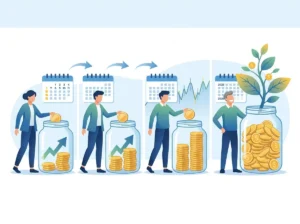
The price of bitcoin in May 2026 went from $82,000 to $72,000 in a couple weeks. Someone who was trying to catch the perfect moment to enter was probably wrong. And someone who bought a fixed amount each week just continued on as planned. That’s the point of the DCA strategy.

Firstly, Shiba Inu was a meme coin featuring a humorous dog within its own ecosystem, which included Layer 2 solutions, DeFi applications and NFT collections. It was one of the most talked-about coins of its time. This is why it gained a large following and developed into a promising project.


